In the first two parts of this post (Part 1, Part 2), I considered the possibility of training my palate to be more sensitive and discerning, not just to wine, but to the world of smells and tastes more generally. Since those two posts, I have been doing smell training, both formal and informal. In this post, I share the results-to-date of those efforts.
When I started the training process, I felt a bit lonely in the endeavor. But the sense of smell is having a minute just now, due to a confluence of a few happenings in our world. Probably the biggest is COVID-19 and the many thousands of people who experienced loss or distortion of smell and taste as a symptom and after-effect. Though smell re-training therapy had been around for a several decades, COVID-19 generated many, many new patients who needed it, and used it with some level of success.
Wine appreciation is also a hot topic in media and entertainment at the moment, with films (e.g. “Somm”), streaming series (e.g. “Drops of God”–both the video version, and the manga animation it is based on), and books (e.g. “Cork Dork”) putting a spotlight on wine, the sense of smell and smell training.
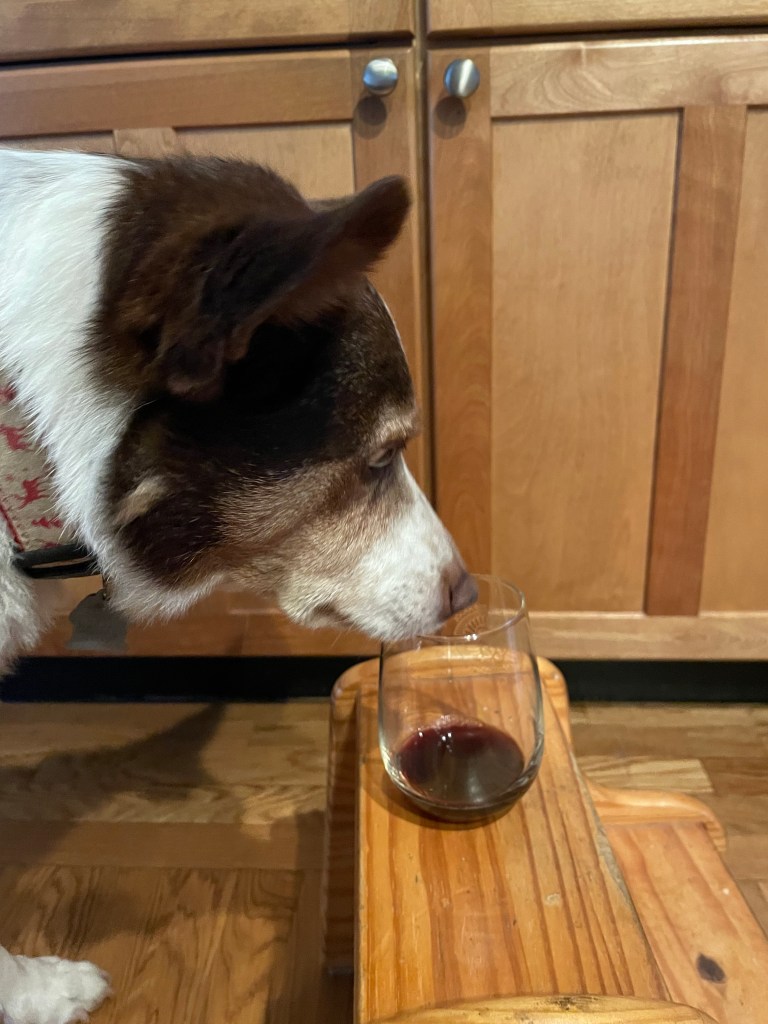
The science part of smell training is also having a minute, or more. For several centuries, smell was considered a “crude” or “base” sense, inferior to sight and hearing, and maybe even devolving away in humans. Recent research has shown that the sense of smell is far more complex and sophisticated than previously thought, and also strongly tied to overall health and well-being (see recent survey of research on the NIH website). “Cork Dork” (gifted to me by a subscriber–thanks!) has a great chapter (“The Brains”) covering the complexity and power of the human sense of smell, including the surprising finding that humans are objectively better at smelling many odors that rats, mice, and pigs, and even dogs(!) for some odors. And, there is growing scientific evidence that “olfactory training” is effective in slowing the decline of smell sensitivity due to aging (survey of research on efficacy on the NIH website).
All this is making me feel a bit less of an odd duck for focusing a small amount of energy and effort on smell training.
Formal Training
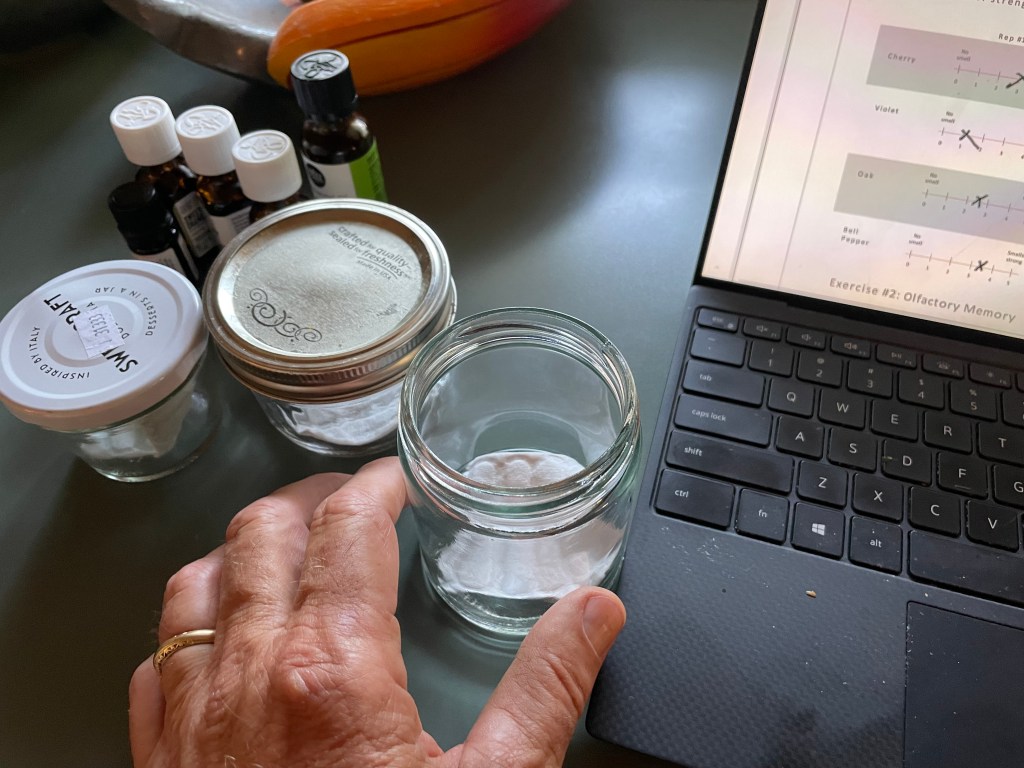
I mentioned in Part 2 that I had been recruited by Frauke Galia, an aromatherapist and smell training coach, to participate in a beta test of her “Smell Gym”. Her concept is to treat the sense of smell as a “muscle” that needs to be regularly trained and exercised in order to stay in shape for the long haul. She developed a set of classes, much like a spin class you would take at a gym, but focused on maintaining and developing your sense of smell. She offers those classes online now. Without divulging too much about the classes, participants pre-prepare scent jars for each class, and those are used in a series of three or four exercises that challenge the sense of smell, and the brain, to experience and process those scents in new ways. I have just started the online classes, and they are fun and rewarding. Each class takes about an hour.
I sometimes use the worksheets provided for the classes to do a more structured smell exercise on my own, too. It is definitely more fun to do the online classes, since a part of the class is sharing the experience with others.
Informal Training
Aspiring sommeliers are notorious for obsessively smelling almost anything they can get their hands on. Obsession may be the operative word, but the idea that you improve your sense of smell by using it more often and more intentionally is definitely not crazy. So, part of my effort to improve my sense of smell is to make time, at least a few times a day, to stop and smell something intentionally. By that, I mean taking a minute or two to clear my mind, smell something, and give that experience time to sink in. Some popular items in the mix for those moments are listed below.
- Ripe fruit: peaches, nectarines, bananas–pretty much anything on the counter is fair game. Day 2 of a peach is usually different than day 1, and day 3 different than day 2, etc.
- Coffee is another one: unground beans, ground beans, brewed coffee, coffee grounds in the filter.
- Herbs and spices: my favorite is to close my eyes, randomly grab a jar out of the spice drawer, and smell it without looking at it. It is usually easy to identify, but the little bit of surprise generated by not seeing it intensifies the smell.
- And, wine, of course: both the everyday glass, and the more formal tasting events. The more people are around, the more effort it takes to focus on the aromas in the glass in front of me.
Takeaways
When it comes to training your sense of smell, more is better. More frequent, more varied and more intentional.
One practice has helped me get more out of informal smell training I do:
- When I smell something, I try to put some sort of word or description to what I am smelling. Some smells are elemental. A rose smells like…well, a rose. But is that a sweet smell, or sour? A warm smell, or cool? Any time I can verbalize (even silently) something about what I am smelling, it strengthens that experience. It also helps to clear me to mind of other things, and focus more on what I am smelling.
With smelling wines, in particular, I am currently working on two things that have helped me quite a bit:
- Focus on the first sniffs. I now try to clear my brain, and focus my attention on that first try with a new glass of wine. If I get nothing, that is OK. Usually, going back again and again, trying to find something, does not work. There is science behind this–your nose habituates to a new smell very quickly. So, if I decide a glass is worth a second smell, I try to “clear” my nose as best I can. A drink of water, a few deep breaths, and look away from the glass for a minute or so. Then, re-focus my attention, and another set of sniffs.
- Avoid the “drowning person” reaction. Wine is one of the most complex substances, in terms of aroma, and the best wines usually have several distinct aromas. Much more often than I did, say, a year ago, when I smell a wine, I get at least one distinct aroma right off the bat. Progress! But, I have found that I often sort of cling to that one aroma, like a drowning person clings to a life preserver. I am trying to avoid this reaction. If I get one smell, I mentally say to myself, “OK, clove, got it, what else?”. This discipline is a work in progress, for sure.
Finally, sometimes I just drink it and enjoy, without all the fuss. Cheers!

 Talented Amateur