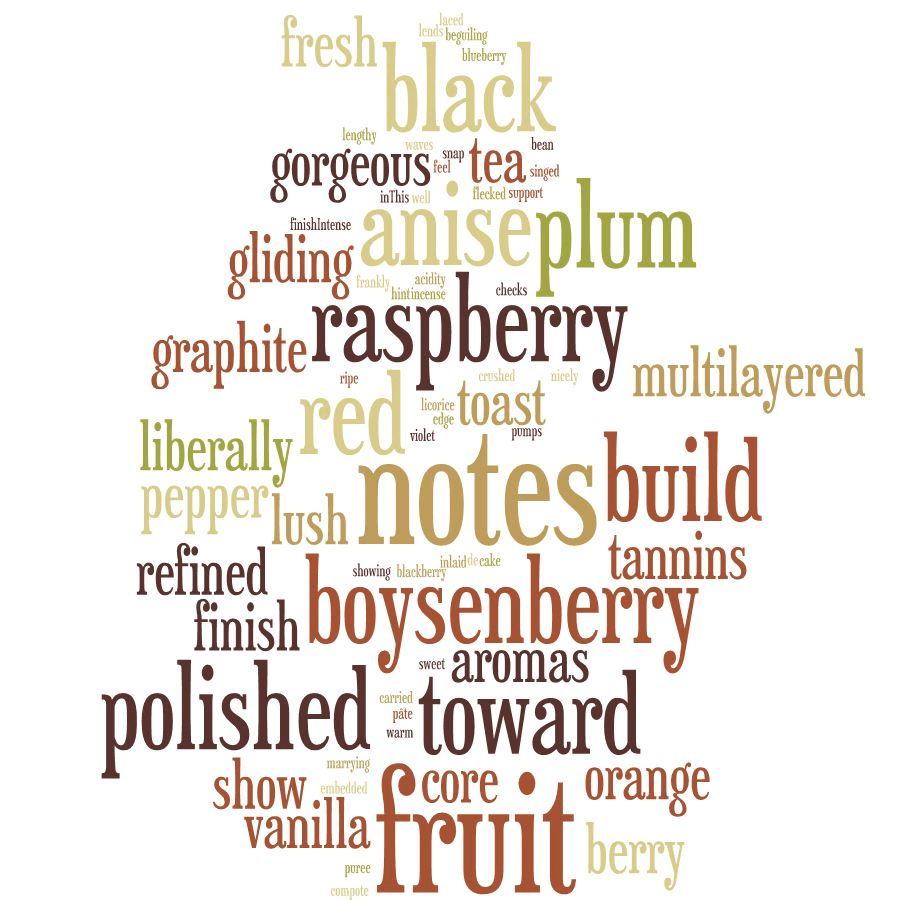
The word-cloud at left was built from pasted-together reviews of eight of my favorite red wines. For a lot of people, “wine words” like this are taken as a joke, and a person at a gathering of friends is at high risk of ridicule if they provide an unsolicited “wine word” assessment of what they are drinking. If we don’t have something simple like scores to rely on, is a cloud of flowery “wine words” all we have?
After looking at scores in depth, my confidence in them as a stable, reliable source for making buy decisions was shaken, for sure. The solution I came up with at the end of Post #5 is, basically, continue to use scores, but to use my past experience to identify “trusted reviewers” who’s scores and reviews aligned well with my tastes in wine. And, yes, paying more attention to what those trusted reviewers are saying about the wine, in addition to their scores.
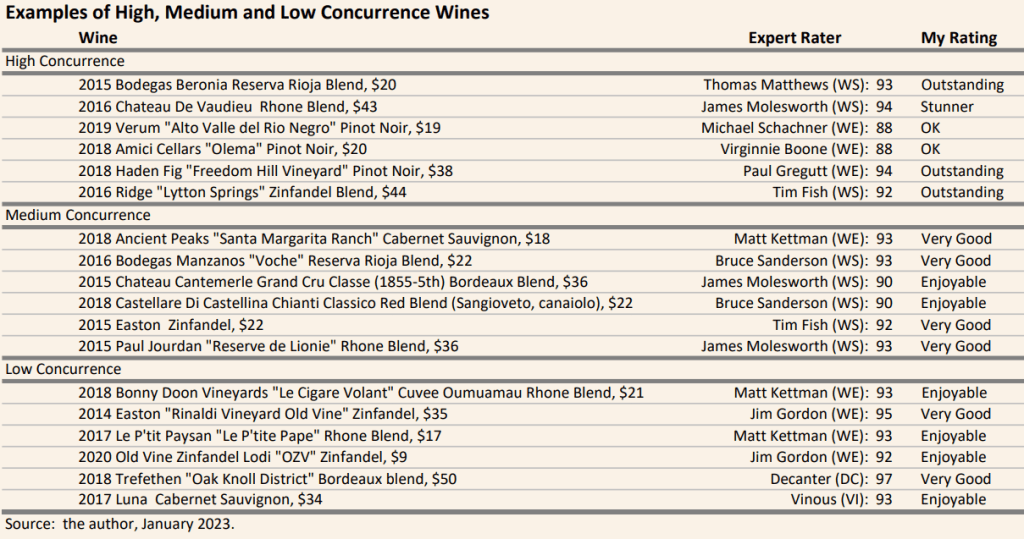
In order to identify my list of trusted reviewers, I went back through my own wine notes, which I keep for all the wines I get. It is an excel spreadsheet, with mostly the descriptive information of the wines I acquired, along with my own very simple rating and tasting notes on the wines I drank. I also included the best expert wine score that was available when I bought the wine. I spent some time adding to each entry: the name of the reviewer for the score; the Vivino score; and finally, the “level of concurrence” between my assessment of a wine and the wine score I had at the time of purchase. So, if I like a wine a lot that was also scored highly, my level of concurrence was “high”. If I didn’t like a wine that was scored low, level of concurrence was also “high”. If I didn’t like a wine that was scored highly, level of concurrence was “low”. Basically, it was a “low-medium-high” rating for how well aligned I was with the reviewer’s assessment. The table below gives a few examples of specific wines at different level of concurrence with expert reviewers–in most cases, those expert reviewers played a role in my buy decision for that wine (see some “Additional Notes” on this at the end of this post).
In identifying my trusted reviewers, I also wanted to account for tendency of reviewers to post outlier scores for wines (one subject of Post #5). For me, a trusted reviewer is someone whose judgement on wines I concur with, but also someone who is unlikely to post unusually high scores on wines. The table below shows the results of that effort. Moving forward, I’ll be using this decide which reviews to pay attention to, and which to discount or even ignore.
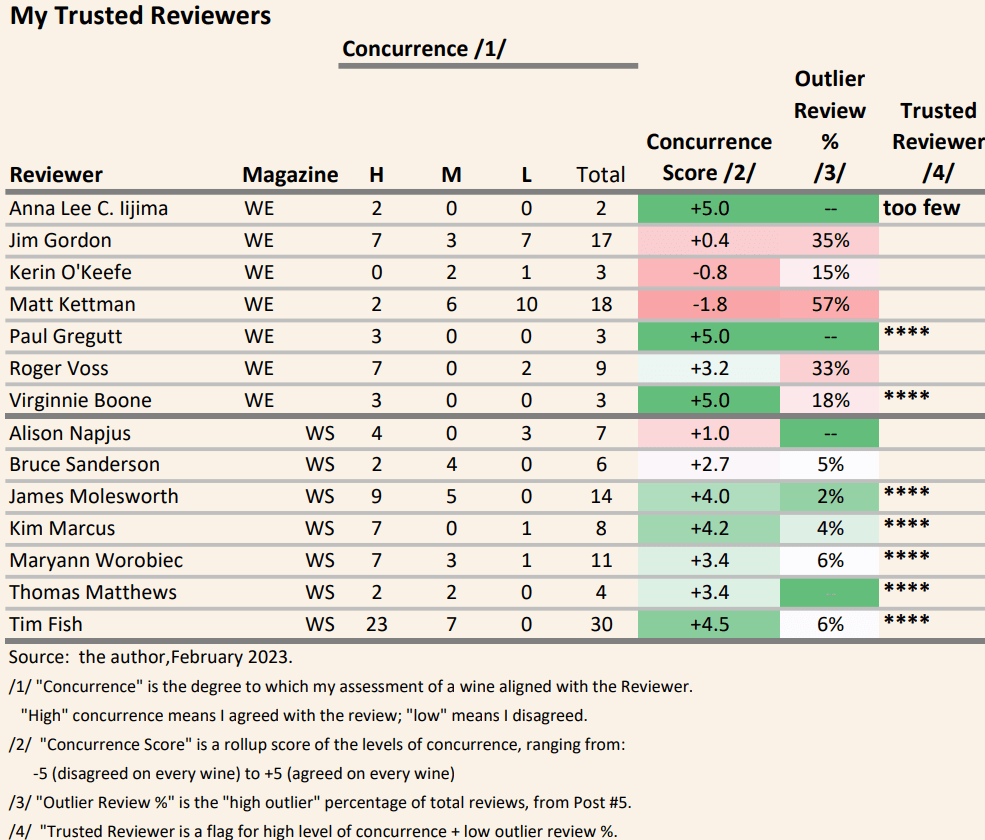
I intend to keep this list current as I buy and try new wines. Things change among the reviewers, too. For example, Anna Lee C. Iijima has left WE, and is freelancing now–her reviews will increasingly be unavailable to me. Paul Gregutt has started his own wine review and blog site (Paul Gregutt’s Substack | Substack), which is well worth checking out–Paul has a healthy skepticism of numeric wines scores, and is steering his new endeavor away from them as much as possible. I just subscribed to Wine Advocate, which has its own slate of reviewers to get to know. So the list will change over time.
Additional Notes
Some of the “low concurrence” wines on the table above definitely were some of the disappointments that inspired a lot of the work on this post and the prior three. Strictly speaking, a “disappointment” meant my buy decision was influenced by a high expert score, I over-paid for the wine, and ultimately felt like the wine did not live up to the high score. A couple of the “low concurrence” wines met this definition: The Easton Rinaldi Zinandel ($35) and the Trefethen Oak Knoll District Cabernet Sauvignon Blend. But most of the “low concurrence” wines were relatively cheap ($9 to $20), and objectively I probably did not overpay for them. What seemed to be too good to be true (a budget wine with 92+ points), probably was in those cases. Outstanding wines at a low price definitely exist, but I think they are rare.
Second, I looked ahead to some of the wines that I bought, but have not yet opened, and have a watch list of wines that I have my fingers crossed for.



 Talented Amateur